

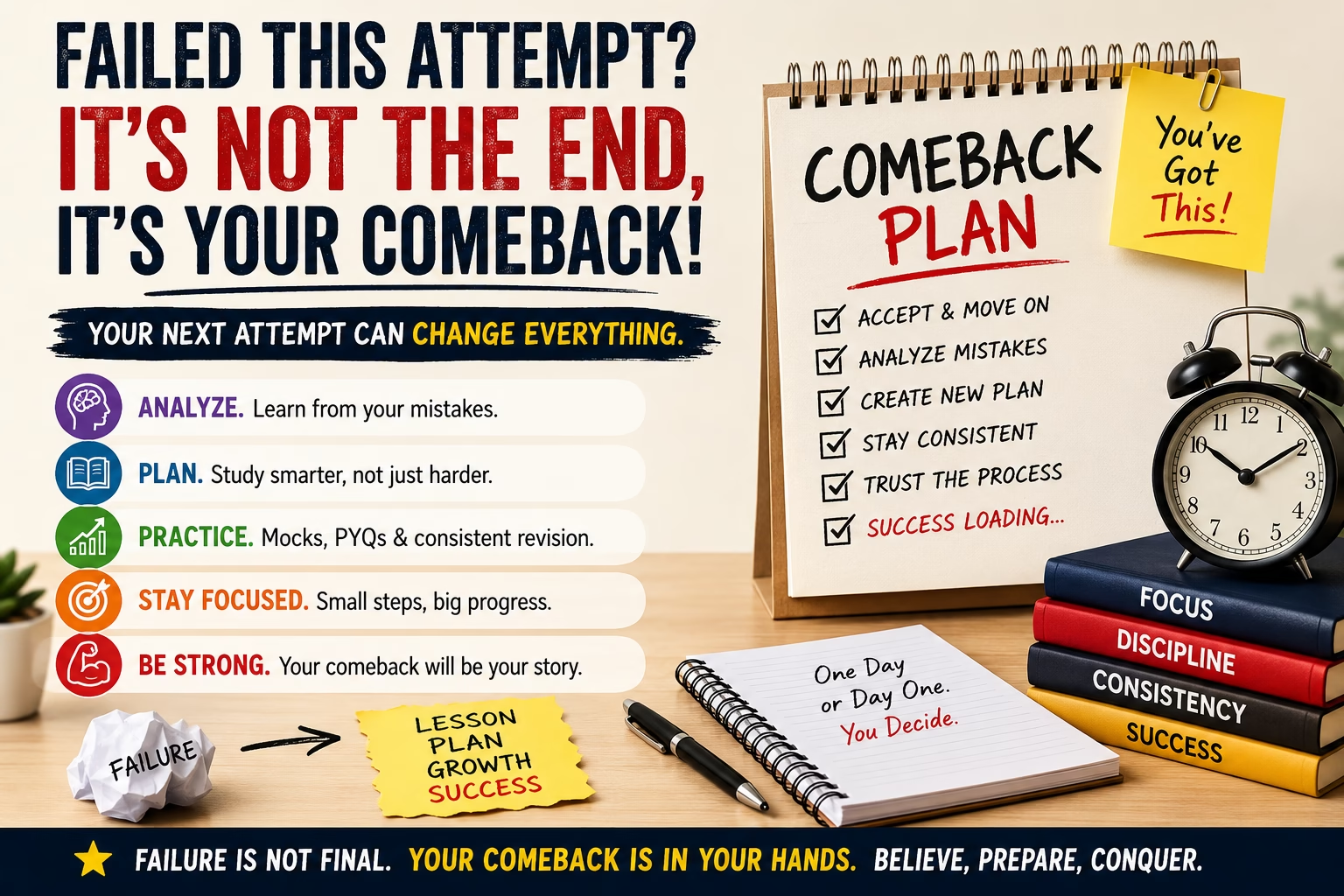
“CA students have a unique talent—we can turn one exam result into a full-blown life crisis before the internet even finishes loading the marksheet.”
You studied hard. You sacrificed weekends, skipped outings, and probably knew your books better than some of your friends. And then the result arrived.
Not Cleared.
It hurts. It disappoints. It makes you question your preparation and sometimes even yourself.
But here’s something every successful Chartered Accountant eventually learns:
A failed CA attempt is not the end of your journey. It is simply feedback on your strategy.
Many rank holders and successful professionals have faced setbacks before achieving success. What separated them from others was not extraordinary intelligence—it was their ability to learn, adapt, and come back stronger.
If you’ve had a failed CA attempt, this practical comeback plan will help you regain confidence and prepare strategically for your next examination.
📋 Summary: What You’ll Learn in This Article
| Challenge | Practical Solution |
|---|---|
| Feeling demotivated | Accept your emotions and refocus |
| Not knowing what went wrong | Analyze your mistakes honestly |
| Low confidence | Build momentum through small wins |
| Syllabus overload | Prioritize high-weightage topics |
| Fear of failing again | Practice mock tests and manage anxiety |
| Lack of direction | Create a structured study plan |
📑 Table of Contents
- Why a Failed CA Attempt Is Not the End
- Accept the Disappointment
- Analyze What Went Wrong
- Create a Smarter Study Plan
- Rebuild Confidence
- Focus on High-Weightage Topics
- Use Mock Tests Strategically
- Manage Exam Anxiety
- Seek Guidance and Track Progress
- Final Thoughts
Why a Failed CA Attempt Is Not the End
A failed attempt hurts because of the effort behind it.
Months of preparation, sacrifices, and expectations suddenly seem wasted.
But they are not.
Every hour you studied has taught you something—whether it is concepts, discipline, or understanding your weaknesses.
Many successful Chartered Accountants have faced one or more unsuccessful attempts before eventually clearing their examinations.
📌 Key Takeaway: A failed attempt is not a verdict on your capability. It is an opportunity to improve your strategy.
Accept the Disappointment and Move Forward
The first step is honesty.
You are disappointed, and that’s perfectly normal.
Give yourself permission to process your emotions.
Action Steps
- Take one or two days to reset mentally
- Talk to a mentor, friend, or family member
- Avoid comparing your result with others
- Accept the result without judging yourself
Once you’ve processed the disappointment, make one decision:
Your comeback starts today.
💡 Remember: Feel the disappointment, but don’t build a permanent home in it.
Analyze What Went Wrong
The smartest students don’t ask, “Why did this happen to me?”
They ask, “What can I learn from this?”
Treat your previous attempt like an audit.
Questions to Ask Yourself
- Did I complete the syllabus properly?
- Did I revise enough times?
- Did I solve enough mock tests?
- Was my answer presentation weak?
- Did anxiety affect my performance?
- Did I struggle with time management?
Your answers become the blueprint for your next preparation plan.
Create a Smarter Study Plan
Simply studying harder isn’t always the answer.
Studying smarter usually is.
Break your preparation into priorities.
| Priority | Meaning |
|---|---|
| High | Weak areas and high-weightage chapters |
| Medium | Topics needing revision |
| Low | Chapters requiring excessive effort for limited marks |
Your timetable should include:
- Concept learning
- Daily revision
- Mock tests
- Previous year papers
- Regular breaks
A realistic study plan is far more powerful than an unrealistic timetable that lasts for only three days.
📌 Key Takeaway: Consistency beats intensity.
Rebuild Confidence Through Small Wins
Confidence usually takes the biggest hit after a failed CA attempt.
Students begin questioning themselves.
“Maybe I’m not capable enough.”
“Maybe CA isn’t for me.”
The truth?
Confidence isn’t recovered overnight.
It is rebuilt gradually.
Start Small
- Complete one chapter
- Solve one test paper
- Revise one difficult concept
- Finish one study session successfully
Every small achievement becomes evidence that you’re moving forward.
Momentum creates confidence.
And confidence creates consistency.
Focus on High-Weightage Topics
One common mistake after a failed attempt is trying to restart the entire syllabus from zero.
That often leads to frustration.
Instead, focus on areas that give maximum returns.
Prioritize Smartly
- Identify frequently tested chapters
- Strengthen scoring areas
- Revise topics you already know
- Improve manageable weak subjects
- Keep low-yield topics for later
Think strategically.
You don’t need to master every page equally.
You need to maximize marks.
⚠️ Avoid This Mistake: Trying to study everything again at the same intensity.
Use Mock Tests Strategically
Almost every rank holder emphasizes one thing:
Practice under exam conditions.
Mock tests help improve:
- Speed
- Answer presentation
- Time management
- Confidence
- Exam temperament
How to Use Mock Tests Properly
- Attempt papers within actual exam timings
- Avoid checking answers midway
- Review mistakes honestly
- Rewrite weak answers
- Track recurring errors
The examination hall should feel familiar, not frightening.
Mock tests create that familiarity.
Manage Exam Anxiety Effectively
After a failed attempt, fear of repeating the same result becomes real.
Even prepared students begin overthinking.
Fortunately, anxiety can be managed.
Simple Practices That Help
- Practice deep breathing
- Take short breaks
- Sleep adequately
- Visualize yourself writing confidently
- Avoid constant comparison with others
💡 Remember: A calm mind recalls information far better than a stressed mind.
Seek Guidance and Track Progress
Many students isolate themselves after an unsuccessful result.
Don’t.
Guidance can save months of confusion.
Speak to:
- Teachers
- Mentors
- Seniors
- Friends who understand the CA journey
At the same time, track your preparation.
Maintain a simple progress sheet.
Record:
- Chapters completed
- Mock tests attempted
- Revision cycles finished
- Topics requiring improvement
Small wins may seem insignificant.
But they compound into confidence and consistency.
Final Thoughts
A failed CA attempt is painful.
But it is not permanent.
The students who succeed after failure are not always the smartest.
They are usually the ones who become more disciplined, more strategic, and more self-aware.
Key Takeaways
- Accept your emotions but don’t stay stuck
- Analyze your mistakes honestly
- Create a smarter study plan
- Focus on high-weightage topics
- Practice mock tests consistently
- Stay calm and track your progress
- Keep showing up every day
Your result may have delayed your destination.
It has not changed it.
“Your first failed CA attempt doesn’t define your future. Your willingness to stand up, learn, and begin again—that is what truly defines your journey.”
Frequently Asked Questions
Is a failed CA attempt normal?
Yes. Many successful Chartered Accountants have experienced one or more unsuccessful attempts before clearing their examinations.
How long should I take a break after failing a CA exam?
Take one or two days to process your emotions and then gradually return to a structured study routine.
How do I regain confidence after a failed CA attempt?
Start with small study goals, complete manageable tasks, and track your progress consistently.
Should I change my preparation strategy after a failed CA attempt?
Absolutely. Analyze your mistakes and build a smarter, more structured study plan instead of repeating the same approach.
Helpful Resources for CA Students
- ICAI Official Website – Official announcements, examination notifications, and student information.
- ICAI BoS Knowledge Portal – Study materials, Revision Test Papers (RTPs), Mock Test Papers (MTPs), Suggested Answers, and recorded lectures.