
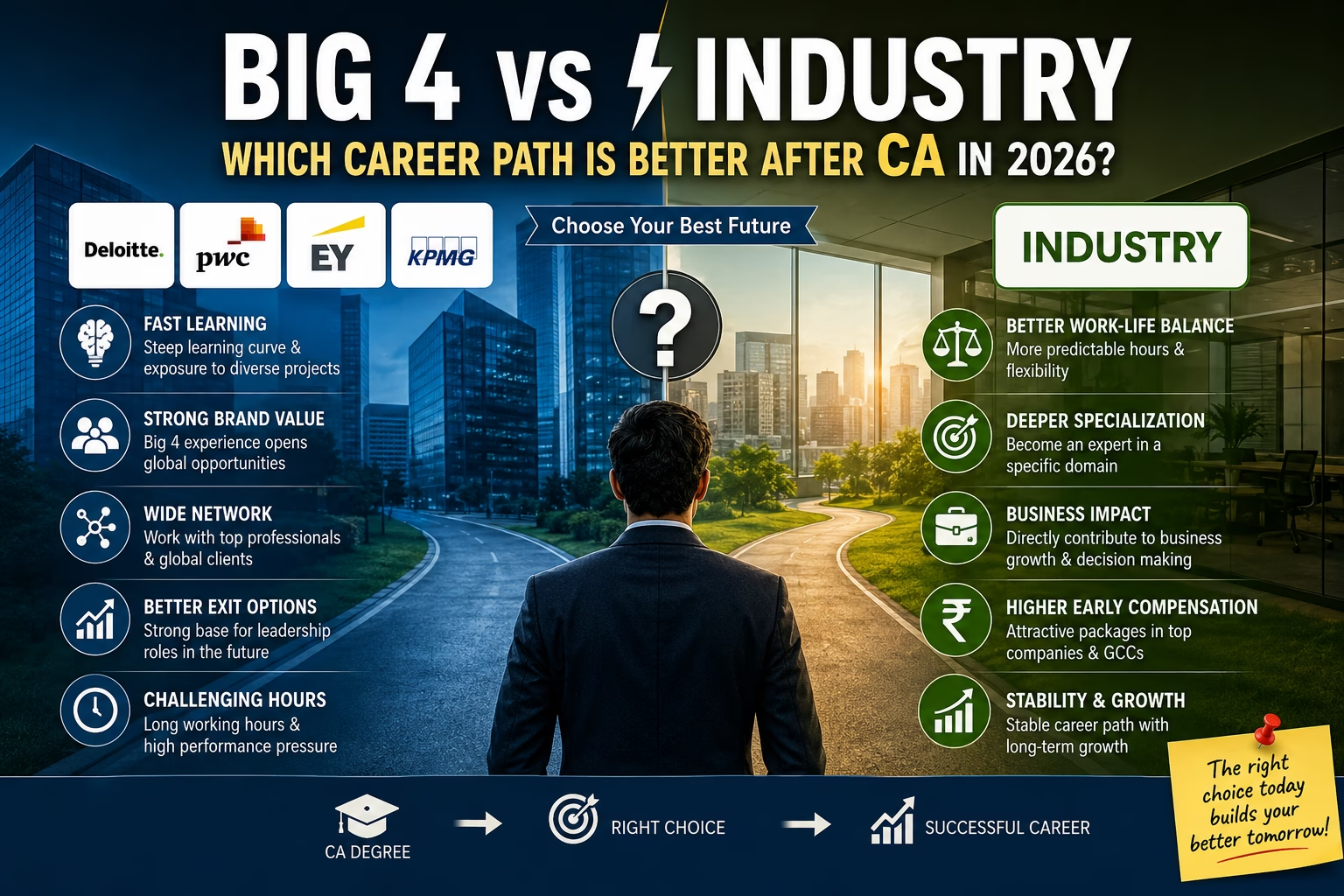
Big 4 vs Industry
A Complete Career Guide for CA Freshers
Every year, thousands of newly qualified Chartered Accountants face one major career decision:
Should I join a Big 4 firm or move directly into Industry?
It’s one of the most debated topics among CA students, and the answer isn’t as straightforward as most people think.
Some CAs dream of working with global clients at Deloitte, PwC, EY, or KPMG.
Others prefer the stability, work-life balance, and specialization that industry roles offer.
So, which career path is actually better in 2026?
Let’s break it down.
Big 4 vs Industry :
Why This Decision Matters More Than Ever
The finance profession is changing rapidly.
Companies are increasingly adopting:
- Artificial Intelligence (AI)
- Data Analytics
- Automation Tools
- ESG Reporting
- Global Compliance Frameworks
As a result, employers are looking for professionals who can create business value—not just prepare reports.
The career path you choose after CA can significantly influence:
- Salary growth
- Learning opportunities
- Work-life balance
- Future leadership roles
- Global mobility
Option 1: Starting Your Career in a Big 4
Big 4 vs Industry :
The Big 4 firms include:
- Deloitte
- PwC
- EY
- KPMG
These firms serve some of the world’s largest companies and offer exposure that few organizations can match.
What You Gain
1. Exceptional Learning Curve
In a Big 4 environment, you often work on multiple clients across different industries.
Within a few years, you may gain exposure to:
- Audits of listed entities
- Financial reporting
- Risk management
- Internal controls
- Due diligence assignments
- Mergers and acquisitions
Many professionals describe their first three years in a Big 4 as equivalent to five or six years of learning elsewhere.
2. Strong Brand Value
Having a Big 4 name on your resume can significantly strengthen your professional profile.
Recruiters often view Big 4 experience as evidence of:
- Technical competence
- Client management skills
- Professional discipline
This brand value can create opportunities later in your career.
3. Faster Professional Network Growth
Working with multiple clients allows you to build relationships across industries.
These connections often become valuable when seeking future opportunities.
4. Better Exit Opportunities
Many CFOs, Finance Controllers, and Finance Directors started their careers in Big 4 firms before transitioning into industry.
Challenges of Big 4 Careers
No career path is perfect.
Common challenges include:
Long Working Hours
Busy season can be demanding.
Deadlines, audits, and client deliverables often require extended working hours.
Frequent Travel
Depending on the service line, travel can become a regular part of the job.
Slower Immediate Compensation
Although salaries are competitive, some industry roles may offer higher fixed compensation early in your career.
Option 2: Starting Directly in Industry
Big 4 vs Industry :
Industry roles involve working within a company’s finance function.
Examples include:
- Financial Analyst
- FP&A Analyst
- Finance Manager
- Tax Manager
- Business Finance Professional
- Treasury Executive
What You Gain
1. Better Work-Life Balance
While exceptions exist, industry roles generally provide more predictable schedules.
This can be valuable for professionals pursuing:
- Additional certifications
- Side businesses
- Content creation
- Personal development
2. Deeper Specialization
Unlike consulting or audit environments, industry allows professionals to become experts in a specific area.
You may develop expertise in:
- FP&A
- Treasury
- Taxation
- Business Finance
- Investor Relations
- Corporate Strategy
3. Faster Business Understanding
Industry professionals work closely with operational teams.
This helps them understand:
- Revenue generation
- Cost management
- Business strategy
- Profitability drivers
4. Higher Early Compensation Potential
Many companies offer attractive packages to qualified CAs, especially in sectors such as:
- Consulting
- Technology
- Financial Services
- GCCs (Global Capability Centers)
- Startups
Challenges of Industry Careers
Limited Cross-Industry Exposure
You typically work within one company and one industry.
Learning can become narrower compared to a Big 4 environment.
Slower Network Expansion
Your professional network may grow more slowly than professionals serving multiple clients.
Switching Domains Can Be Harder
After several years in a specialized role, changing career tracks may require additional effort.
Salary Comparison in 2026
Big 4 vs Industry :
While compensation varies significantly by location, company, and role, a broad trend exists.
Big 4
Typical entry-level packages:
₹10–16 LPA
Higher packages may be available in consulting, deals, and specialized advisory practices.
Industry
Typical entry-level packages:
₹12–25+ LPA
Top-performing companies, multinational corporations, and GCCs can offer substantially higher compensation.
However, salary should not be the only deciding factor.
Long-term career growth often matters more than the first package.
Which Path Leads to CFO Roles Faster?
Big 4 vs Industry :
There is no universal answer.
Many CFOs come from:
- Audit backgrounds
- Consulting backgrounds
- FP&A backgrounds
- Business finance backgrounds
What matters most is:
- Leadership ability
- Commercial understanding
- Strategic thinking
- Communication skills
The path matters less than how effectively you use it.
The 2026 Trend: Big 4 + Industry Combination
Big 4 vs Industry :
A growing number of successful finance professionals follow this path:
Stage 1
Spend 2–5 years in a Big 4.
Stage 2
Move into industry at a managerial level.
Stage 3
Progress toward senior leadership roles.
This approach combines:
✔ Strong technical foundation
✔ Broad exposure
✔ Better compensation growth
✔ Business leadership experience
Many recruiters continue to value this combination highly.
So, Which Career Path Is Better?
Big 4 vs Industry :
Choose Big 4 if you want:
- Fast learning
- Strong technical skills
- Brand value
- Diverse exposure
- Better exit opportunities
Choose Industry if you want:
- Better work-life balance
- Higher initial compensation
- Business-focused roles
- Specialization
- Long-term operational leadership
Final Thoughts
Big 4 vs Industry :
The real question isn’t:
“Big 4 or Industry?”
The real question is:
“Which environment will help me become the professional I want to be?”
A successful CA can thrive in either path.
The professionals who grow fastest are not necessarily those who choose the perfect first job.
They are the ones who continuously learn, adapt, build relationships, and create value wherever they work.
In 2026, skills, adaptability, and business understanding matter more than job titles alone.
Choose the path that aligns with your long-term vision—not just your first salary package.
🔗 Join 10,000+ CA Students using our Test Series to study smarter and create your own academic brand. Structured tests with detailed feedback.