
How to Crack Forensic Audit in 2026:
Forensic Audit is no longer a niche domain.
It has become one of the fastest-growing career opportunities for Chartered Accountants, finance professionals, and audit aspirants.
With increasing corporate frauds, regulatory pressure, digital transactions, and data-driven investigations, companies today are aggressively hiring professionals who understand fraud detection, investigation techniques, and forensic analysis.
But here’s the problem.
Most CA students never get real forensic audit exposure during articleship.
Still, many firms and companies interview newly qualified Chartered Accountants for forensic audit roles.
So the biggest question becomes:
How do you prepare for forensic audit interviews without practical exposure?
This blog answers exactly that.
How to Crack Forensic Audit in 2026 :
What Is Forensic Audit?
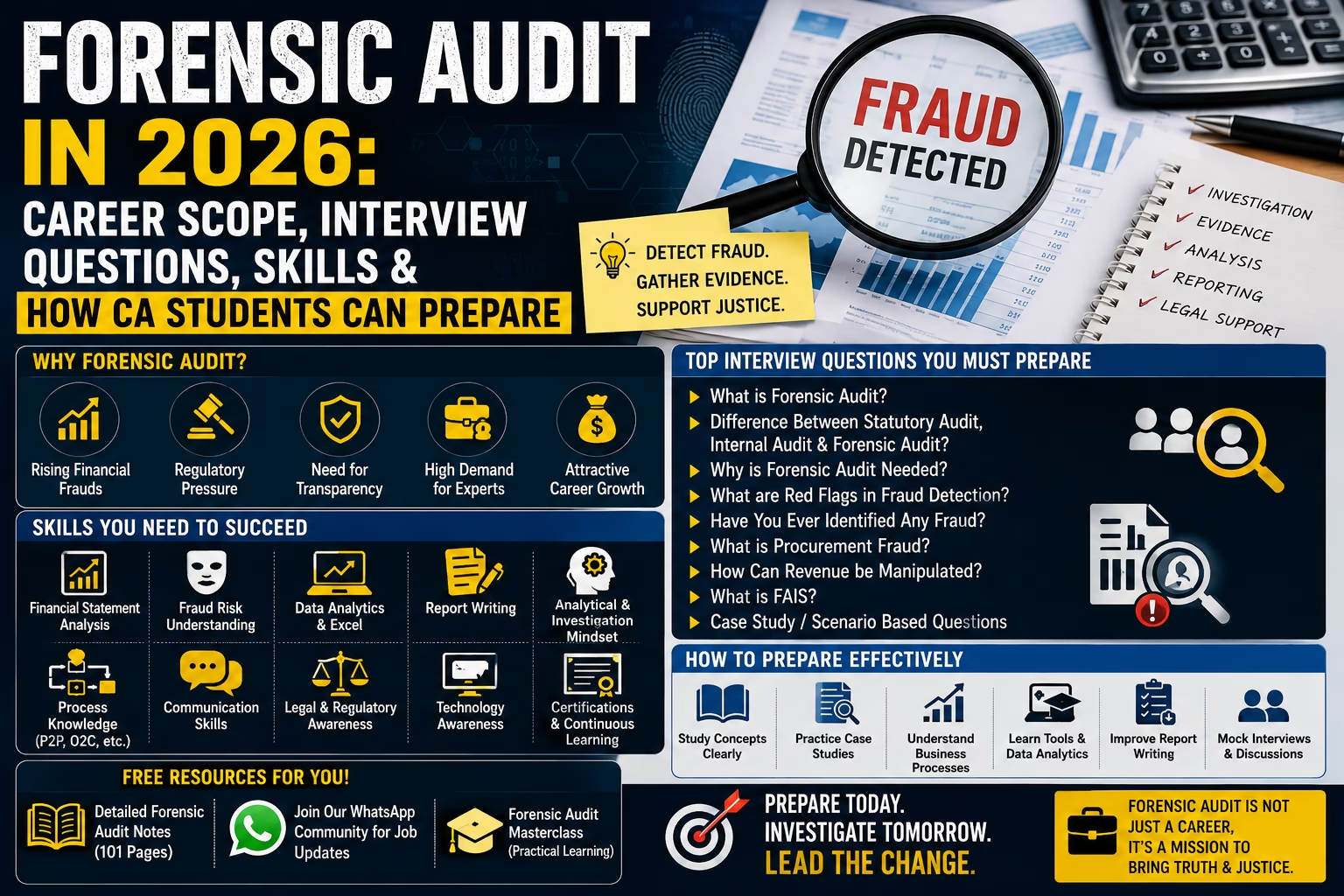
Forensic Audit is an in-depth examination of financial records to:
- Detect fraud
- Gather evidence
- Support legal or disciplinary actions
Unlike traditional audits, forensic audits focus on investigation and fraud identification rather than only financial reporting accuracy.
It combines:
- Accounting
- Investigation
- Technology
- Legal understanding
- Data analytics
This is why forensic audit is becoming one of the most exciting domains in finance today.
Why Forensic Audit Careers Are Growing Rapidly
The rise in financial frauds, fake invoicing, procurement scams, cyber frauds, and accounting manipulations has increased the demand for forensic professionals.
Companies now want experts who can:
- Identify suspicious transactions
- Analyze red flags
- Investigate financial manipulations
- Conduct fraud risk assessments
- Prepare forensic reports
Big 4 firms, consulting firms, banks, multinational corporations, and investigation agencies are actively building forensic teams.
Why Most CA Students Struggle in Forensic Audit Interviews
The biggest challenge is lack of practical exposure.
Most students do not get forensic audit work during articleship.
As a result:
- They understand theory
- But struggle with practical case-based questions
However, interviewers usually know this.
They mainly test:
- Your thought process
- Fraud understanding
- Practical reasoning
- Red flag identification
- Process knowledge
This means proper preparation can still help you crack forensic audit interviews even without direct experience.
What Type of Candidates Are Preferred in Forensic Audit?
Companies generally prefer candidates who have:
1. Internal Audit Exposure
Candidates with internal audit experience are highly preferred because they already understand:
- Internal controls
- Process flows
- Compliance gaps
- Operational risks
2. Statutory Audit Background
Stat audit exposure helps candidates understand:
- Financial statements
- Accounting entries
- Regulatory requirements
- Reporting structures
This becomes extremely useful in fraud investigations.
3. Strong Profile & Certifications
Candidates with additional learning stand out.
Examples include:
- Forensic audit certifications
- Excel & data analytics
- Fraud investigation courses
- Financial analysis
- Risk management programs
Companies increasingly prefer candidates who show initiative beyond academics.
Most Important Forensic Audit Interview Questions
1. What Is Forensic Audit?
This is usually the first question asked.
A strong answer should include:
- Fraud detection
- Evidence gathering
- Investigation
- Legal support
Simple definitions are often more effective than complicated textbook answers.
2. Difference Between Statutory Audit, Internal Audit & Forensic Audit
Interviewers frequently test conceptual clarity.
You should understand:
| Audit Type | Main Objective |
|---|---|
| Statutory Audit | True & fair view of financial statements |
| Internal Audit | Process improvement & control testing |
| Forensic Audit | Fraud detection & investigation |
This comparison is extremely important for interviews.
3. What Are Red Flags in Fraud Detection?
One of the most important areas in forensic interviews.
Fraud is usually identified through “red flags.”
Examples:
- Missing invoices
- No proof of delivery
- Repeated vendor selection
- Unusual cash transactions
- Backdated approvals
- Manual overrides
- Unusual increase in revenue
- Abnormal cash balances
Interviewers love asking practical red flag-based questions.
4. Have You Ever Identified Any Fraud?
Even if you have not worked directly in forensic audit, interviewers may ask:
“Have you ever noticed suspicious transactions during articleship?”
They mainly want to evaluate:
- Observation skills
- Risk thinking
- Analytical mindset
Even small examples from audit exposure can help.
5. Procurement Fraud Questions
Procurement is one of the highest fraud-risk areas.
This is why interviewers ask many questions related to:
- Purchase orders
- Vendor selection
- Quotation manipulation
- Fake suppliers
- Duplicate payments
You should understand the Procure-to-Pay (P2P) process thoroughly.
6. Revenue Manipulation Questions
Interviewers often ask:
- How can revenue be inflated?
- How can expenses be hidden?
- How are balance sheets manipulated?
These questions test practical accounting understanding.
7. Process-Based Questions
You may also be asked about business processes like:
- Procure to Pay (P2P)
- Order to Cash (O2C)
- Hire to Retire (H2R)
- Financial Statement Closure
- Inventory management
Understanding process flow is extremely important in forensic investigations.
Report Writing Is a Major Selection Factor
How to Crack Forensic Audit in 2026 :
One of the most underrated skills in forensic audit is report writing.
Finding fraud is not enough.
You must also know how to:
- Document findings
- Present evidence
- Draft investigation reports
- Explain financial impact
- Maintain professional language
Strong report writing skills can significantly improve selection chances.
Case Study Questions Are Becoming Common
How to Crack Forensic Audit in 2026 :
Modern forensic interviews are becoming highly practical.
Example:
“How will you identify ghost employees in payroll?”
Interviewers may then continue asking:
- What documents will you check?
- How will you verify attendance?
- What analytical procedures will you perform?
- How will you confirm fake employees?
This is why practical thinking matters more than memorization.
Understanding FAIS Is Becoming Important
How to Crack Forensic Audit in 2026 :
Many forensic interviewers now ask about FAIS.
FAIS stands for:
Forensic Accounting and Investigation Standards
These standards were introduced by the ICAI to standardize forensic investigations and reporting practices.
Even basic awareness of FAIS creates a positive impression during interviews.
Technology & Data Analytics Are Changing Forensic Audits
How to Crack Forensic Audit in 2026 :
Forensic audit is no longer only manual investigation.
Today, companies increasingly use:
- Data analytics
- Automation tools
- E-discovery platforms
- AI-driven investigation systems
Popular forensic tools include:
- Relativity
- Intella
- Data analysis platforms
This is why students with technology understanding get an advantage.
Why Simulation-Based Learning Helps
How to Crack Forensic Audit in 2026 :
One of the best ways to learn forensic audit is through practical simulation.
For example:
- Fraud case studies
- Dummy investigations
- Financial manipulation examples
- Report drafting practice
- Interview simulations
Practical exposure builds confidence much faster than theory alone.
Skills Every Future Forensic Auditor Needs
How to Crack Forensic Audit in 2026 :
If you want to build a career in forensic audit, focus on:
- Financial statement analysis
- Fraud risk understanding
- Data analytics
- Excel
- Report writing
- Process understanding
- Communication skills
- Investigation mindset
- Technology awareness
These skills matter more than rote learning.
Final Reality Check
How to Crack Forensic Audit in 2026 :
Forensic audit is one of the most exciting opportunities for CA students today.
But it is also becoming highly skill-driven.
The students who succeed are the ones who:
- Understand fraud practically
- Think analytically
- Learn technology
- Build strong communication
- Practice case studies
- Improve report writing
- Prepare before interviews
The future of audit is moving toward investigation, analytics, and technology.
And forensic audit sits exactly at the center of that transformation.
🔗 Join 10,000+ CA Students using our Test Series to study smarter and create your own academic brand. Structured tests with detailed feedback.